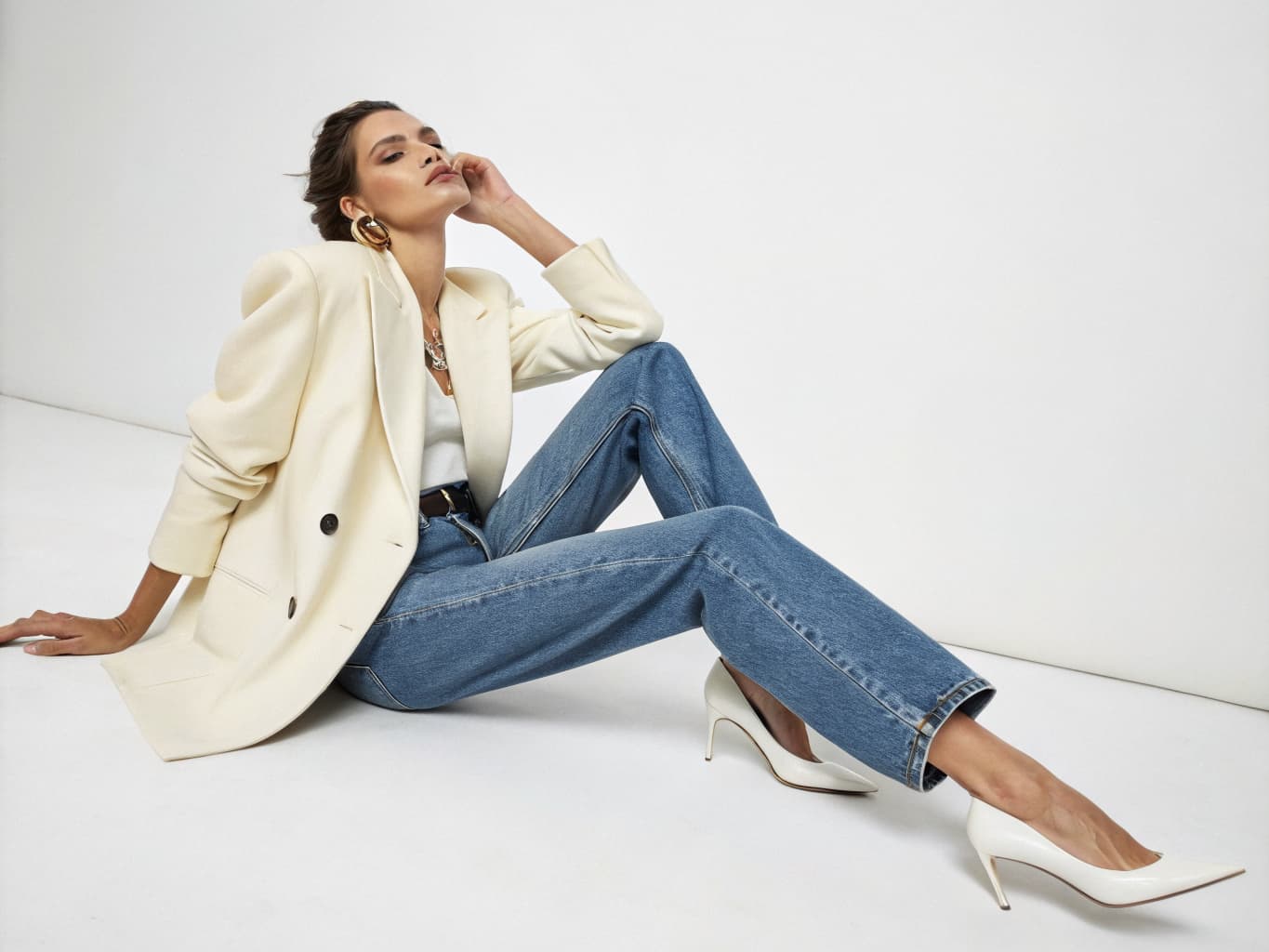
AI Outfit Combination: Style Complete Looks Without Samples
Outfit combination generates a complete styled look by placing several individual garments — a top, a bottom, footwear, accessories — on a single AI model in one render. It is the least discussed capability in AI fashion photography, and the one that turns a folder of separate product shots into a lookbook.
Last updated: July 15, 2026.
Traditionally, showing a complete outfit required having physical samples of every piece ready simultaneously, a model to wear them, and a photographer to capture the combination. For fashion brands managing collections across multiple categories, this creates enormous logistical complexity.
AI outfit combination eliminates that complexity entirely.
What is AI Outfit Combination?
AI outfit combination is the process of selecting multiple garment assets — a top, a bottom, footwear, and accessories — and generating a single AI model image showing all pieces styled together as a complete look.
The AI integrates each garment's fabric, color, and shape properties, composites them onto the model's body in a realistic way, and produces a single cohesive image showing the complete outfit — as if a real model had worn all pieces for a real photoshoot.
Why Outfit Combination Matters
Average Order Value
Research consistently shows that customers who view complete outfit recommendations spend more than customers who view individual items. Styled looks with multiple pieces create cross-category purchase intent — a customer who came for a blazer is much more likely to add the trousers if they see how the outfit works together.
The clearest documented example: Rhone, a men's performance-apparel brand, replaced single-item product shots with styled, complete-outfit pages and saw a 39% increase in average order value and a 10x return on investment within its first 100 days (Stylitics/Rhone case study). That's one brand's result, not an industry-wide guarantee, but it lines up with why physical retailers have used "complete the look" merchandising for decades — a mannequin dressed head-to-toe sells more than the same items folded separately on a table, because the arrangement itself does persuasive work the individual pieces can't do alone.
Brand Storytelling
Individual product images show what you sell. Complete outfit imagery shows how your brand thinks about dressing. This distinction is particularly important for brands with distinct aesthetic points of view.
Wholesale Presentation
Wholesale buyers want to understand how a collection works as a whole — which pieces pair naturally, which categories coordinate, how the collection tells a coherent story. Outfit combination imagery communicates this instantly.
Merchandising Efficiency
For e-commerce teams, outfit combination imagery reduces the need to manually create "shop the look" recommendations. AI-generated styled looks can be tagged and displayed as complete outfit recommendations automatically.
What Apparel UX Research Confirms
Baymard Institute, which runs large-scale usability audits of apparel e-commerce sites, treats "goes well together" and "buy the outfit" cross-sell presentation as a dedicated research area within apparel UX, not a minor add-on (Baymard, Apparel & Accessories research). Baymard's review of apparel sites found that 21% still don't show products on a human model at all, and 82% fail to provide sufficient sizing information for a shopper to judge fit with confidence (Baymard Institute). Across the sites reviewed, 90% neglect at least one best practice that shoppers rely on to decide whether a garment will actually work for them.
None of that is really about photography quality. It's about context. A shopper deciding whether a blazer suits them is answering a harder question than "is this a nice photo of a blazer" — and a single isolated garment shot doesn't give them the information to answer it.
The Shift Toward AI-Assisted Discovery
Fashion brands aren't alone in recognizing this gap. McKinsey and The Business of Fashion's State of Fashion 2025 report found that 50% of fashion executives surveyed named product discovery as the top use case for generative AI, and 82% of consumers said they want AI to help reduce the time they spend researching what to buy before purchasing (reported by Fashion Dive, summarizing McKinsey & BoF's State of Fashion 2025). Complete outfit imagery is a direct answer to that demand — it hands the shopper a finished styling decision instead of raw materials they still have to assemble themselves.
How AI Outfit Combination Works
1. Upload Your Garment Assets
Prepare flat-lay or product images for each piece you want to combine. For best results:
- Upload each garment separately (top, bottom, shoes, accessories each as individual images)
- Use clean backgrounds for each garment
- Ensure each image shows the garment clearly without obstructions
2. Select Your Combination
Choose which garments to combine into a single look. Leading platforms support combinations across multiple categories:
- Top: Shirt, blouse, jacket, coat, sweater, dress
- Bottom: Trousers, skirt, shorts, culottes
- Footwear: Any shoe type
- Accessories: Belt, bag, hat, scarf, jewelry
Alovia supports up to 4 garment categories in a single outfit generation.
3. Select Your Model and Pose
Choose an AI model appropriate to the outfit's target customer and an editorial pose that shows the complete look effectively. For full-length outfits, standing and walking poses typically work best.
4. Generate Your Look
The AI composites all selected garments onto the model's body, accounting for garment layering (e.g., a shirt inside a jacket), spatial relationships between items, and natural drape for each piece.
Generation takes 10–30 seconds regardless of how many garments are combined.
5. Iterate and Export
View the result and adjust as needed. Swap individual pieces, change the model, try a different pose — each iteration takes seconds. Export at 4K resolution when satisfied.
Use Cases for Outfit Combination
E-commerce "Shop the Look" sections: Generate styled looks for your e-commerce "shop the look" feature, showing customers complete outfits that include multiple purchasable items.
Lookbook and campaign creation: Build complete lookbook pages showing styled seasonal looks without needing all samples present simultaneously.
Social media content: Create outfit inspiration content for Instagram, Pinterest, and TikTok that drives multi-item purchases.
Wholesale presentation: Show buyers how individual pieces in your collection combine, demonstrating the breadth and cohesion of your offering.
Category expansion demonstrations: Show how a new product category integrates with existing pieces — for example, introducing footwear to a previously apparel-only brand.
Outfit Combination vs. Single-Garment Photography
| Factor | Single-Garment Photography | Outfit Combination |
|---|---|---|
| Pieces per image | 1 | 2–4+ |
| Samples needed | All individually | Can combine from any point in production |
| Average order value impact | Baseline | 39% higher in one documented case (Stylitics/Rhone) |
| Content production time | 10–30 seconds | 10–30 seconds (same) |
| Credit cost | 10 credits/image | 10 credits/image (same) |
Common questions about combining outfits with AI
Q: How many garments can I combine in one AI outfit generation? A: Leading platforms support combinations across 4 garment categories: top, bottom, footwear, and accessories. Within each category, you select a single piece. This means you can generate complete head-to-toe outfit images combining a jacket, trousers, shoes, and a bag — all from flat-lay uploads.
Q: Do I need samples of all pieces to create outfit combinations? A: No. AI outfit combination works from flat-lay or product photography of individual pieces. You don't need the physical samples together — just good images of each piece. This is particularly valuable when samples arrive at different times across a production cycle.
Q: Can I use outfit combination for garments from different collections? A: Yes. AI outfit combination doesn't require pieces to be from the same collection or season. This makes it useful for styling existing inventory with new arrivals, or creating "forever" content that combines evergreen pieces.
Q: What resolution does AI outfit combination output? A: Professional AI fashion platforms output outfit combination images at 4K resolution — suitable for e-commerce, print, and high-resolution display advertising.
Q: Does showing a complete outfit actually change buying behavior, or is it just a better-looking photo? A: The available evidence points to a real behavioral effect, not just aesthetics. In one documented case, switching to styled, complete-outfit pages produced a 39% lift in average order value and a 10x return on investment within 100 days (Stylitics/Rhone case study). That's a single brand's result, not a universal guarantee, but it's consistent with the long-standing retail logic behind "complete the look" merchandising in physical stores.
Q: Does complete-outfit merchandising replace single-item product photos? A: No — it works alongside them. Shoppers still need a clean, isolated product shot to evaluate one specific item's color, texture, and detail. The outfit view answers a different question: how that item reads in context with other pieces.
Q: Why does Baymard Institute identify "goes well together" merchandising as a key apparel UX practice? A: Baymard's research found that 90% of major apparel sites neglect at least one best practice shoppers rely on to decide whether a garment will work for them. Context matters: a single blazer shot doesn't answer whether the blazer will pair well with the trousers a shopper wants to wear. Styled outfit imagery solves that problem directly.
Q: How does outfit combination support cross-category purchasing? A: Research shows that customers who view complete outfit recommendations spend more than those viewing isolated items. Styled looks with multiple pieces create cross-category purchase intent — a customer browsing for a top is much more likely to add coordinating trousers or shoes if they see how the pieces work together in a complete look.
Q: What does McKinsey research say about AI and product discovery in fashion? A: McKinsey and The Business of Fashion's State of Fashion 2025 found that 50% of fashion executives named product discovery as the top use case for generative AI, and 82% of consumers want AI to help reduce the time spent researching before purchasing. Complete outfit imagery is a direct response to this demand — it provides shoppers a finished styling decision instead of requiring them to assemble individual pieces themselves.
Q: How do outfit combinations help with wholesale buyer presentations? A: Wholesale buyers need to understand how a collection works as a whole — which pieces pair naturally, which categories coordinate, and how the collection tells a coherent story. AI outfit combination imagery demonstrates these relationships instantly, showing buyers the breadth and cohesion of your offering without requiring physical samples to be styled together in advance.
Conclusion
AI outfit combination transforms how fashion brands create and communicate styled looks. By eliminating the logistical barrier of needing all samples together, in the same location, at the same time, it makes complete-look content creation accessible to any brand with a smartphone and an AI subscription.
The result: higher average order values, stronger brand storytelling, and more effective wholesale presentations — all from a 30-second generation.
Try Alovia's Outfit Combination demo — see complete outfit generation in action, no sign-up required.
Related: AI Virtual Try-On Guide · Fashion Pose Swap Guide · Try Outfit Combination →
İsmail spent years building product and technology at Altın Yıldız — Turkey's benchmark for premium menswear — before founding Alovia to bring AI-powered content creation to fashion brands worldwide.
Connect on LinkedIn →