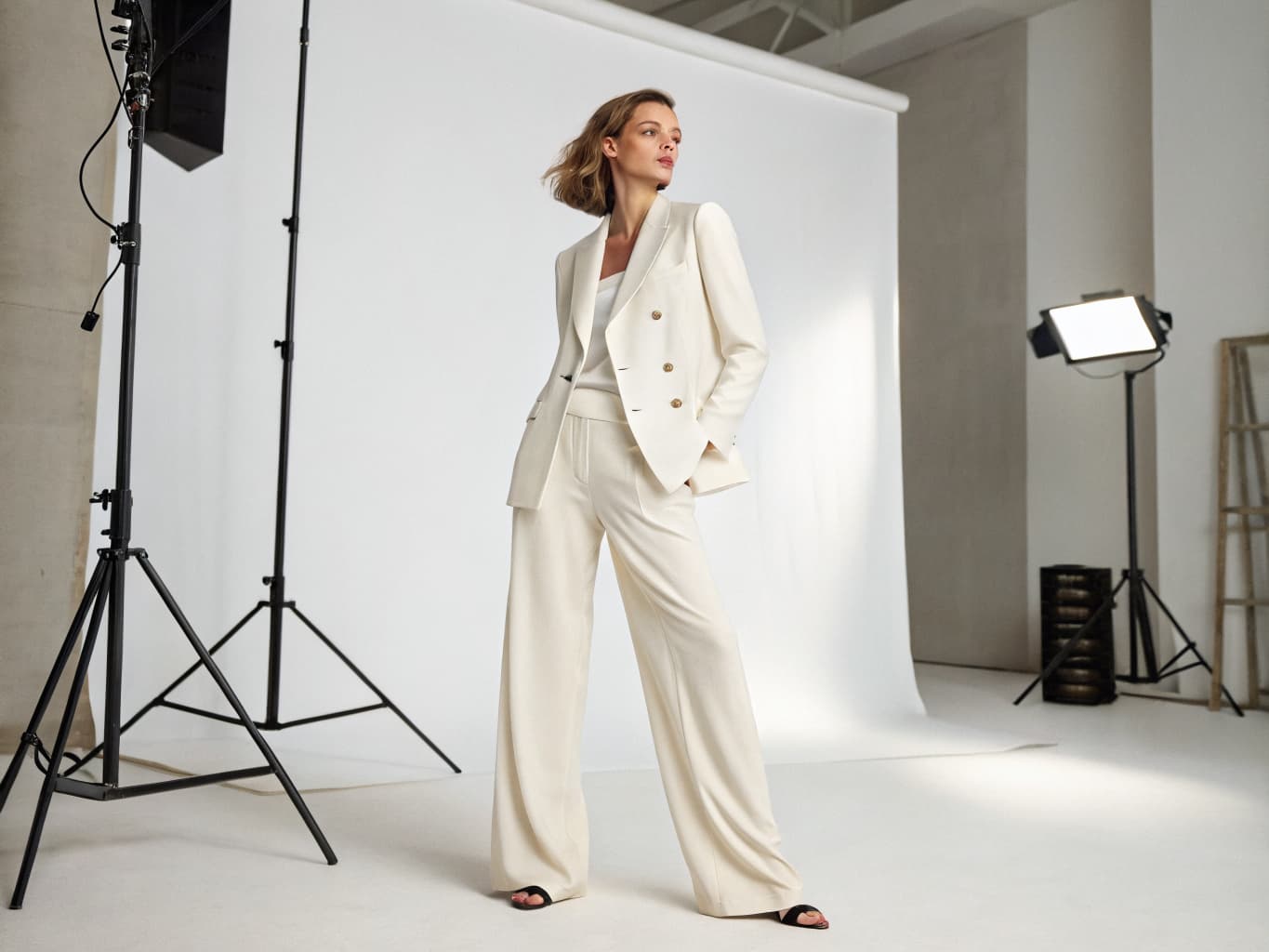
What Is AI Fashion Photography? A Complete Guide
What is AI Fashion Photography? Complete Guide for Fashion Brands
The global fashion industry spends billions on photography every year. Great imagery drives sales, builds brand identity, and tells stories that move customers to act. But traditional fashion photography is slow, expensive, and inflexible. A single campaign shoot can cost $5,000 to $50,000 and take weeks to plan, execute, and edit.
AI fashion photography is changing that equation entirely.
In 2024, the AI-generated fashion photography market was valued at $1.51 billion. By 2029, it's projected to reach $6.11 billion — growing at a compound annual growth rate of 32.1% (GlobeNewswire, 2026). Today, more than 61% of fashion e-commerce platforms globally have integrated at least one AI imaging tool into their workflows — up from just 28% in 2022.
So what exactly is AI fashion photography, and how can your brand use it? This guide covers everything you need to know.
What is AI Fashion Photography?
AI fashion photography is the process of using artificial intelligence to generate professional-quality fashion images without traditional photoshoots. Instead of booking a studio, hiring models, and coordinating a production crew, brands upload garment images and use AI tools to automatically place those garments on virtual models, in customized environments, and in a variety of poses.
The result: studio-quality fashion imagery in seconds, at a fraction of traditional costs.
AI fashion photography platforms combine several AI technologies — computer vision, generative AI, and diffusion models — to extract garments from flat-lay photos, realistically drape them onto AI-generated models, generate diverse backgrounds and lighting conditions, and produce high-resolution output ready for e-commerce, social media, and print.
How Does AI Fashion Photography Work?
1. Garment Extraction and Analysis
The AI analyzes your uploaded garment image — whether a flat-lay, ghost mannequin photo, or product shot. Computer vision algorithms identify the garment's shape, texture, color, and fabric properties. Advanced systems detect subtle details like stitching patterns, sheen, and drape behavior.
2. Virtual Placement and Pose Generation
The extracted garment data is applied to a selected AI model. Generative AI systems realistically render the garment on the model's body, accounting for how the fabric would naturally drape, fold, and interact with body contours and the selected pose.
3. Background Composition and Output
The AI composites the dressed model into a selected background — studio white, editorial environment, lifestyle scene, or custom backdrop. Output is rendered at high resolution (4K or 8K) and delivered in seconds.
Key Capabilities
Virtual Try-On: Place any garment on any AI model, preserving fabric physics, color accuracy, and fit. Multi-garment try-on combines tops, bottoms, footwear, and accessories in a single generation.
Pose Swap: Generate the same outfit across 500+ professional fashion poses without additional photoshoots.
Video Generation: Animate static product images into 5-10 second fashion videos for social media.
Catalog Building: Create complete lookbooks, line sheets, and interactive flipbooks from AI-generated imagery.
AI Upscaling: Enhance existing images to 4K or 8K resolution for print-ready output.
Why Fashion Brands Are Switching
Cost Reduction
A mid-range fashion photoshoot costs $5,000–$15,000 per day, with high-end campaigns exceeding $50,000. Expenses include photographer fees ($1,000–$2,000/day), model fees ($800–$3,000/day), studio rental, styling team, and post-production editing. AI fashion photography reduces these costs by 70–90%.
Speed
Traditional fashion shoots require weeks of planning and post-production. AI photography generates production-ready images in 10–30 seconds. A complete seasonal catalog that once took 4–6 weeks can be produced in 1–2 days.
Scale
AI photography generates each outfit variation in seconds. Brands create hundreds of images per day, covering every SKU without incremental cost.
Consistency
AI systems deliver consistent lighting, color accuracy, and image quality across every output — eliminating variability between photographers and editing sessions.
AI vs. Traditional Photography
| Factor | Traditional | AI Photography |
|---|---|---|
| Cost per image | $150–$1,500 | $0.05–$0.50 |
| Time to first image | 2–4 weeks | 10–30 seconds |
| Crew required | 8–15 people | 0 |
| Daily output | 50–150 images | 500–5,000+ |
| Reshoots | Costly | Instant |
How to Get Started
- Choose a platform — Look for virtual try-on quality, model diversity, resolution, and e-commerce integrations.
- Prepare your garment assets — Upload flat-lay or ghost mannequin photos. Clean backgrounds produce best results.
- Select models and settings — Choose AI models, poses, and backgrounds.
- Generate and review — Most platforms deliver results in 10–30 seconds.
- Export and publish — Download in your preferred resolution or sync with Shopify.
Try Alovia for free — a complete AI fashion photography platform with virtual try-on, catalog builder, video generation, and more. Launch the live demo — no sign-up required.
Common questions about how AI fashion photography works
Q: What is AI fashion photography? A: AI fashion photography uses artificial intelligence to generate professional product images without traditional photoshoots. Brands upload garment photos, select AI models and poses, and the system produces studio-quality imagery in seconds.
Q: How much does AI fashion photography cost compared to traditional shoots? A: Traditional fashion photoshoots cost $1,500–$25,000+ per day, with per-image costs of $150–$1,500 after editing. AI platforms start around $50/month, reducing per-image costs by 90% or more.
Q: Can AI fashion photography replace professional photographers? A: For e-commerce product photography and catalog images, AI is competitive with traditional photography on cost, speed, and consistency. For high-concept editorial campaigns, hybrid approaches combining AI tools with human creative direction work best.
Q: Is AI-generated fashion photography legal for commercial use? A: Yes. Commercial AI platforms license generated images for commercial use including e-commerce, advertising, social media, and print. Always verify the specific platform's license terms.
Q: How realistic are AI-generated fashion photos? A: Modern AI fashion platforms produce highly realistic output. In controlled tests, consumers often cannot distinguish AI-generated images from traditional photography at standard web resolutions. 4K/8K outputs achieve print-quality results.
Q: What computer vision technologies enable AI fashion photography? A: The process involves computer vision algorithms that identify garment shape, texture, color, and fabric properties from uploaded images. These algorithms detect subtle details like stitching patterns, sheen, and drape behavior — data that generative AI systems use to realistically render garments on virtual models.
Q: How does the AI ensure that fabric drapes realistically on the model? A: Generative AI systems account for how different fabric types naturally drape, fold, and interact with body contours and pose. The system learns fabric physics from training data and applies those physics rules to the virtual placement, producing output that mimics real fabric behavior.
Q: What does "studio-quality imagery" mean in the context of AI photography? A: Studio-quality means images are ready for e-commerce, social media, and print without additional editing. AI systems deliver consistent lighting, color accuracy, proper background composition, and professional resolution — the same standards as a professional photoshoot would produce.
Q: Can brands customize the backgrounds and environments for AI-generated images? A: Yes. Most AI fashion photography platforms offer multiple background options: studio white, editorial environments, lifestyle scenes, and custom backdrops. Brands can select the background that matches their aesthetic for each image generation.
Q: What happens if you're not satisfied with the first AI-generated image? A: You can instantly regenerate with different models, poses, or backgrounds at no additional cost. This is one of the key advantages over traditional photography — reshoots that would cost thousands and take weeks in a studio setting take seconds with AI.
Conclusion
AI fashion photography represents a structural shift in how the industry creates visual content. The market is growing at 32.1% annually — and the brands leading that growth are adopting these tools today.
Ready to get started? Try Alovia free — studio-quality fashion imagery in 10 seconds, no photoshoot required.
Related Resources:
İsmail spent years building product and technology at Altın Yıldız — Turkey's benchmark for premium menswear — before founding Alovia to bring AI-powered content creation to fashion brands worldwide.
Connect on LinkedIn →