Solution
Generate on-model photos from flat-lay products, no mannequin form required
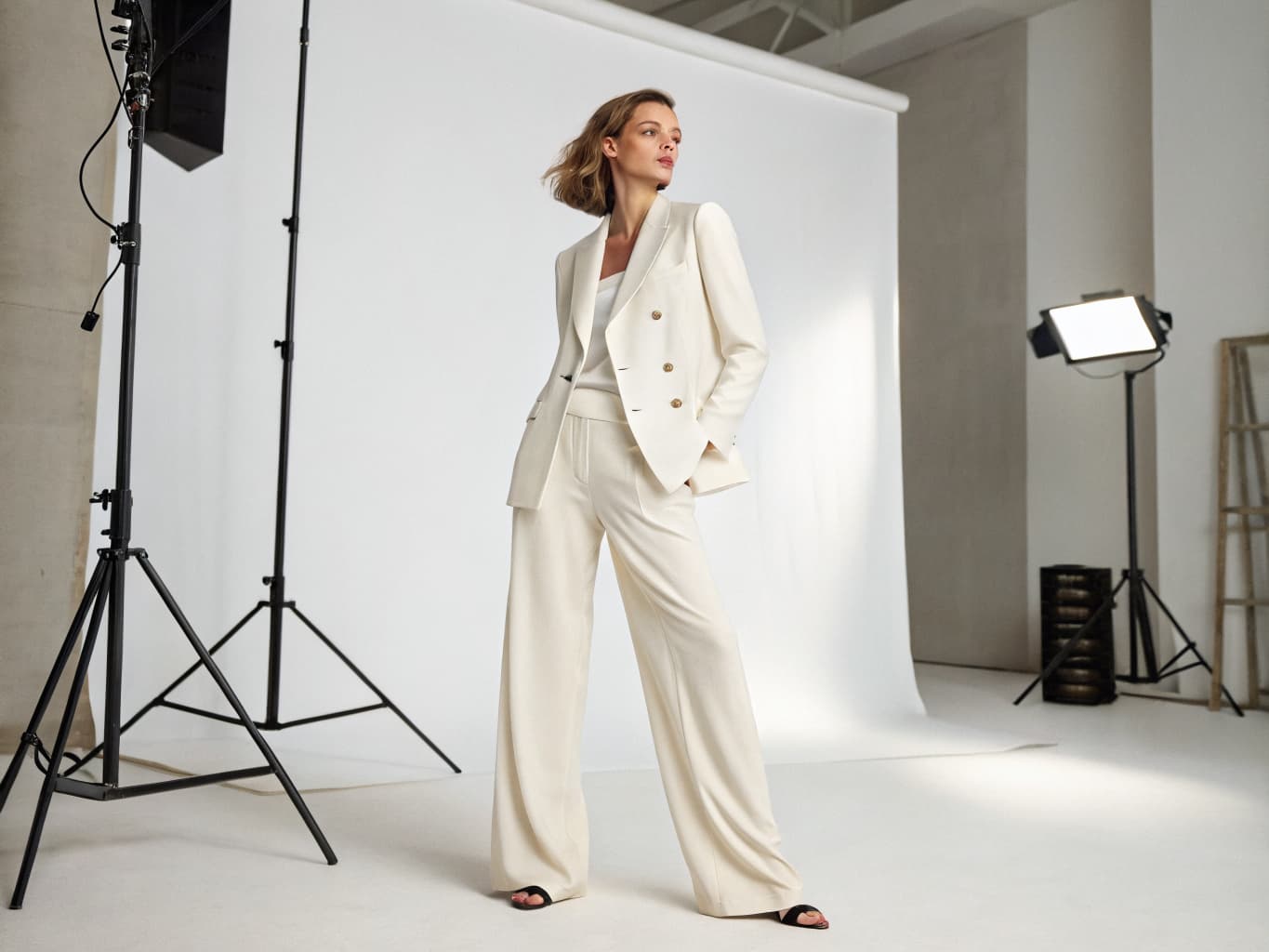
Replacing plastic mannequins means generating photorealistic on-model photos directly from flat-lay or product images instead of shooting on a physical form. Alovia's AI Fashion Models (/products/ai-fashion-models) does this for every item — pick a model from the library filtered by gender, ethnicity, and age group, or upload your own reference model.
Replacing plastic mannequins means generating photorealistic on-model photos directly from flat-lay or product images instead of shooting on a physical form. Alovia's AI Fashion Models (/products/ai-fashion-models) does this for every item — pick a model from the library filtered by gender, ethnicity, and age group, or upload your own reference model.
What you get when you replace plastic mannequins with realistic AI models
What does it cost to replace plastic mannequins with realistic AI models?
| Line item | Traditional photoshoot | With Alovia | Source |
|---|---|---|---|
| Full-service agency product photography, per image | $100–$300+ | 5–20 credits, 1K to 4K | |
| Photographer, per day | $1,500–$4,000 | Not required | |
| Model, per day | $500–$2,000 | Not required | |
| Turnaround to edited delivery | 5–10 business days | Minutes | |
| Cost per look | Billed by the day, not per look | 10 credits, about $1.00 per look | |
| What you pay monthly | Not a subscription | $49.99 Starter · $149.99 Pro |
What do you need to replace plastic mannequins with realistic AI models?
On-model photos without a physical form
AI Fashion Models generates photorealistic on-model images directly from flat-lay photos — no ghost mannequin, physical form, or manual background removal needed.
Pick your own model cast
Filter by gender, ethnicity, and age group to find the right model for your brand, or upload your own reference model instead of relying on a generic form.
Fabric drape and realistic shadows
Every generation renders organic shadows, creases, and realistic fabric folds — the physical realism that makes on-model photography more persuasive than a stiff mannequin form.
Different models, same product photo
Virtual Try-On (/products/virtual-try-on) swaps the model without reshooting — same product photo, different cast choice, new image in minutes.
Full outfit or single garment
Combine Outfit (/products/combine-outfit) composites a top, bottom, footwear, and accessories onto one model, or shoot single items — your choice per product.
Straight into your catalog
Catalog Generator (/products/catalog-generator) arranges every generated photo into a branded layout and exports a PDF or shareable flipbook for buyers.
How do you replace plastic mannequins with realistic AI models?
1. Upload your product photos
Upload a flat-lay or product photo — no mannequin or model present needed in the photo.
2. Choose a model from the library
Filter by gender, ethnicity, and age group to pick the right model, or upload your own reference model image instead.
3. Generate and arrange
AI Fashion Models generates the on-model photo. Arrange every generated look into a branded catalog layout with Catalog Generator, then export or publish.
What do brands who replace plastic mannequins with realistic AI models say?
“When you manage digital retail operations at scale, overhauling your entire visual production pipeline overnight is a massive risk. To test this kind of digital transformation, we decided to pilot Alovia on two of our fast-moving sub-brands first. Traditional photography was already creating bottlenecks for their frequent product drops. By automating the visual asset generation for those specific labels, we instantly cleared the backlog and drastically improved their time-to-market. It gave us a measurable, low-risk environment to prove the technology actually works before planning a rollout for our flagship brand.”

Ruby Smith
Director of Online Retail
“Because I couldn't afford a professional agency, I modeled everything myself. It meant spending my entire Sunday changing outfits, adjusting tripods, and editing photos. Alovia gave me my weekends back. Now, I create stunning virtual try-on images instantly. It's incredibly cost-effective and makes my brand look like we have a massive marketing budget, without the physical toll of a DIY photoshoot.”

Ayse Aydin
Boutique Owner
Questions about how to replace plastic mannequins with realistic AI models
Do I need a physical mannequin form at all?
No. Alovia's AI Fashion Models (/products/ai-fashion-models) generates photorealistic on-model images directly from flat-lay photos, so you skip the mannequin form, which is why many brands use it as an alternative to ghost-mannequin photography.
Is this a ghost mannequin effect or removal tool?
No. Alovia generates a new, on-model photo with a real person wearing the garment — it does not remove, hollow out, or create the ghost-mannequin effect on an existing photo. See Product Photos Without a Model, Mannequin, or Studio (/solutions/photograph-clothes-without-models) for the full workflow.
Can the on-model photo look more natural than a mannequin?
Yes — on-model photography shows realistic body drape, posture, and natural fabric folds, which mannequins cannot replicate. See the demo at /demo/ai-generation to compare.
What if I want a specific model to represent my brand consistently?
Turn on model consistency in Catalog Generator or upload your own reference model image — Alovia will regenerate onto that same model for every product, the way a real casting would.
How much cheaper is this than shooting on a mannequin?
A mannequin form costs $200–$2,000 per item, plus photographer fees per shoot day. Alovia charges 5–20 credits per image depending on resolution (1K/2K/4K), with monthly subscriptions at $49.99 (Starter) or $149.99 (Pro).
Can I show the garment in different poses, or does it look the same every time?
Multiple poses available: Full Body, 3/4 Portrait, Lifestyle Action, plus an optional detail shot. Pose Swap (/products/pose-swap) re-renders a pose from a searchable library without reshooting.
Does on-model photography reduce clothing returns compared to mannequins?
US online sales returns hit 19.3% in 2025. Showing customers accurate on-model fit and drape — the same job mannequin photography aims for — is one lever brands use alongside sizing charts and reviews.
Can Combine Outfit put a full outfit on one model instead of just a single garment?
Yes — upload a top, bottom, footwear, and accessories from separate flat-lay photos and Combine Outfit (/products/combine-outfit) composites all four categories onto one model in a single image.
Ready to replace plastic mannequins with realistic AI models?
Turn your products into buyer-ready catalogs — no photoshoot required.
Sources
- National Retail Federation — US online sales returned in 2025 (19.3%). Source dated 2025-10-15.
- Baymard Institute — Apparel benchmark sites with no human-model image, or only one (21%). Source dated 2025-02-25.
Last updated: